Every architecture project has, at some point, a client who thinks it's straightforward.
What that client doesn't see — because no one explained it to them — is what lies behind that apparent simplicity.
The neighbourhood with ready-made drawings
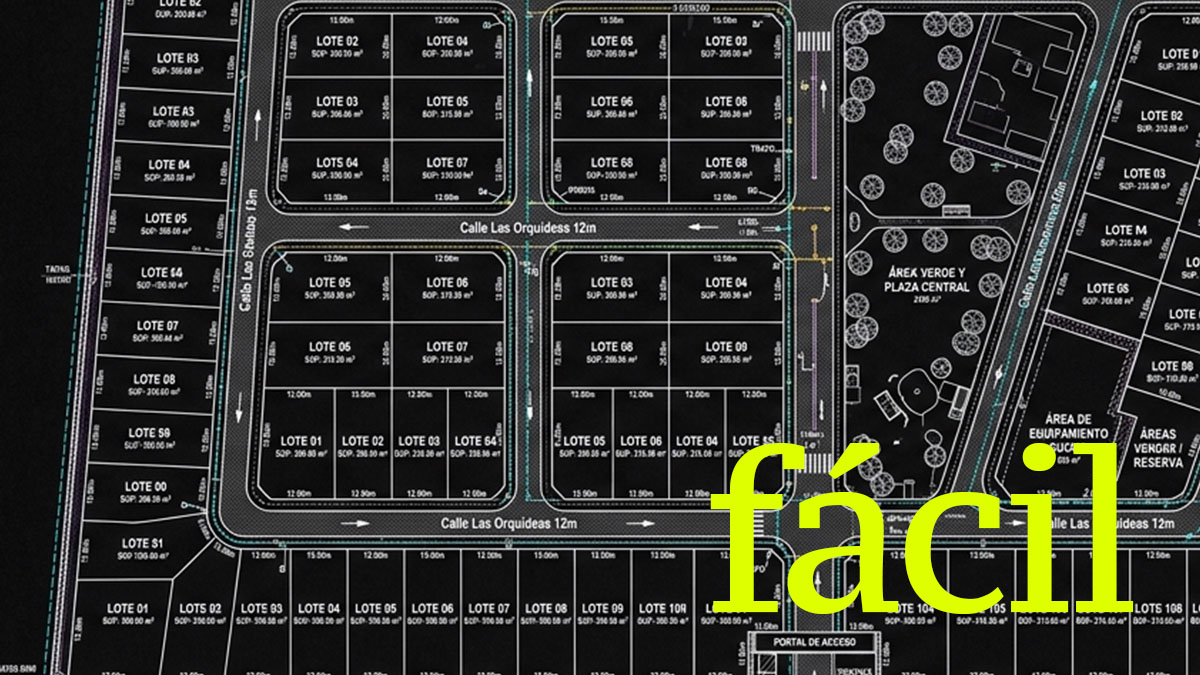
A common scenario: the client is developing a subdivision, has drawings already prepared and just needs an architect to submit them to the municipality for approval. "The work is done," they say. "You just need to file the paperwork." The logic seems reasonable. The fee they offer is not.
What that client doesn't see is what happens after the paperwork goes in. The municipality reviews, comments and returns. Every time. The observations may be minor — a missing figure, an incorrect scale — or substantial: a setback that doesn't comply with current regulations, a density that exceeds what's permitted in that zone, a contradiction between the architectural drawings and the specification. Each observation requires a technical response, a correction to the documentation and a resubmission. That cycle can repeat several times before the file is approved.
Throughout that process, the architect is not a courier. They are the technical authority responsible for the application. If the drawings contain an error the municipality missed but that shows up on site — an incorrect dimension, an element that doesn't meet code — it is the architect's registration that is on the line. Not the draughtsperson who drew the plans, not the client who commissioned them. The professional who signed.
Submitting drawings for approval is not an administrative formality. It means accepting legal responsibility for a complete project. And that has a value that cannot be measured in the time it takes to walk up to a counter.
The fee on offer
The same client who brings a project worth hundreds of thousands of dollars in construction typically offers a professional fee that wouldn't cover a notary visit. The disproportion is not accidental: it is the direct result of not understanding what is being purchased. The architect's work is perceived as a bureaucratic step — a signature, a stamp, a window to queue at — and priced accordingly.
What that fee ignores is that the architect does not charge for the time the process takes. They charge for the knowledge that keeps the process from failing, for the experience that spots the problem before the municipality does, and for the responsibility they take on — with their name and their registration — for a project they did not design but now sign. A low fee does not reduce that responsibility. It keeps it intact, in exchange for less.
What the architect signs
When an architect signs a project they are not signing a drawing. They are signing responsibility for the structure, habitability, code compliance and the safety of the people who will live inside. If something fails, that signature answers for it — to the client, to the municipality, to the law.
Why the fee is never "just for the drawings"
The fee for a project does not pay for hours of drafting. It pays for years of training, experience accumulated across previous projects, the ability to anticipate problems before they appear on site and the knowledge to resolve them when they appear anyway. A design error caught on paper costs a correction. The same error caught during construction can cost ten times as much — and it is the client who pays.
The project that "is easy"
The project that looks simple often conceals the most complex problems: a site with restrictions no one checked, a shared boundary dispute, an installation that doesn't meet code, a roof that leaks from the first winter. The architect's experience is not there to slow down what is straightforward. It is there to catch what is complicated before it gets built.