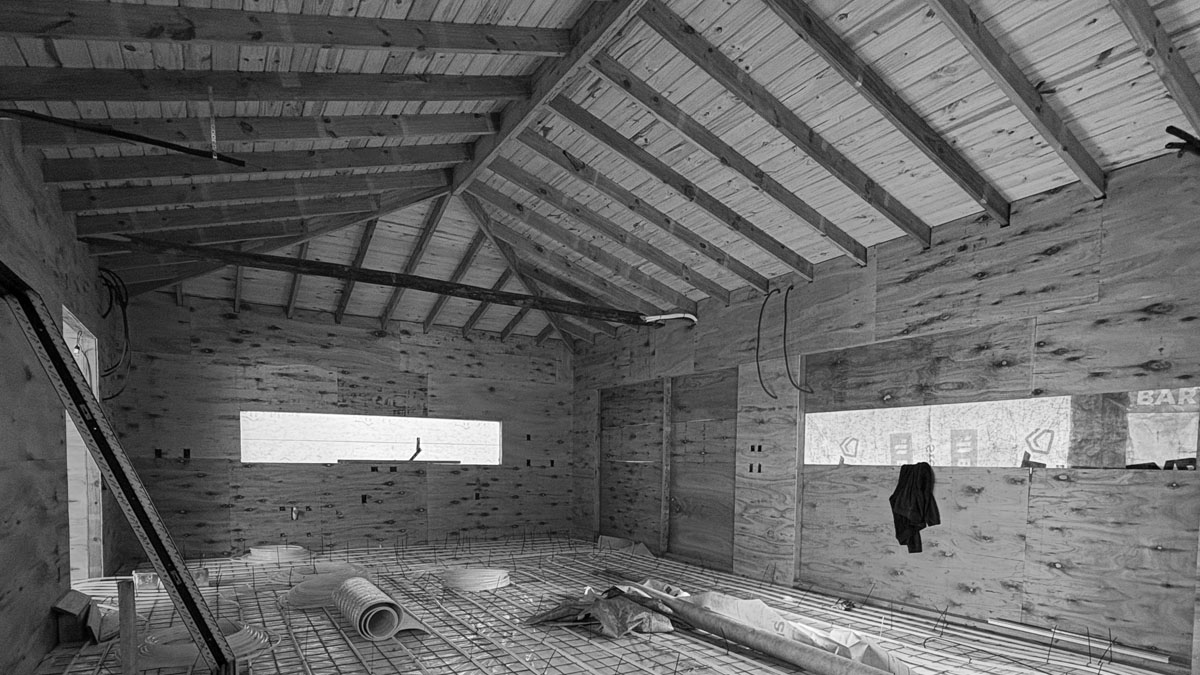
It is the first question in almost every initial consultation. And it is also the hardest to answer with a single number, because construction costs depend fundamentally on the structural system chosen. On the Uruguayan coast, the 2026 reference figures break down as follows.
Reinforced concrete and hardwoods
These are the highest-cost and longest-lasting systems. Concrete construction — the most common in the region — offers thermal mass, resistance to marine conditions and performance that improves over time. Native hardwoods follow a similar logic: robust materials, expressive character and long service life. The reference range for both systems is USD 2,200 to USD 2,500 per square metre of built area.
High-quality dry construction systems
Well-executed wood frame and steel frame — with proper insulation, efficient windows and careful finishes — offer a lower-cost, faster-to-build alternative. Their use has grown steadily in residential projects along the Maldonado coast. The reference cost is approximately USD 1,500/m².
Standard dry construction systems
The standard version of these same systems allows for a well-built home with greater investment efficiency. It is the most common choice for projects with a limited brief or tight timelines. The reference cost is USD 1,000/m².
Additional costs to factor in
The per-square-metre figure does not cover the full project budget. Professional fees — architect and structural engineer — typically run between 8 and 10% of the construction cost. To that add building permits from the Intendencia de Maldonado, utility connections (UTE, OSE, sewer) and, in coastal zones, a prior consultation with the Dirección de Ordenamiento Territorial. Together, these items can add between 20 and 30% on top of the construction cost.
Regulations in coastal zones
Building in José Ignacio, La Barra or Manantiales means working within a specific regulatory framework: a maximum height of six metres in the coastal strip, restrictions on materials in dune areas and minimum setbacks depending on the site's location. Understanding these constraints from the outset is critical — for both the design and the approval timeline.